
Within our neo-pagan society Christianity is considered a subversive religion. How will we live out our faith as aliens in this culture?
Pagans and Christians in the City: Culture Wars from the Tiber to the Potomac by Steven D. Smith, Professor of Law, University of San Diego. Reviewed by Rev. Dr. Douglas Schoelles
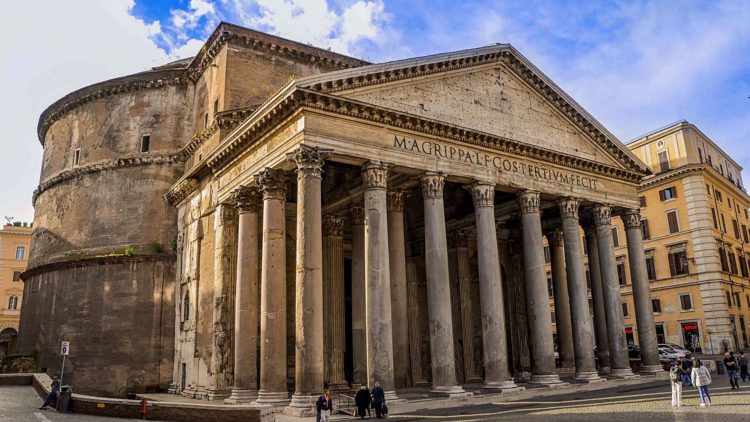
Pagans and Christians in the City is a solid treatise on the philosophical battles Christians must engage for the sake of our own people in this neo-pagan culture. Addressing the issues with fairness, Steven D. Smith makes the case that the current societal and legal conflicts are a renewed struggle of Paganism to “reverse the revolution Christianity achieved in late antiquity” that brought an end to rollicking pagan party of sex and self-liberation (259).
The Golden Age of Roman paganism was a rollicking party where people had the liberty to chase their heart’s desires and passions and to be whoever they wanted to be. This pagan immanent religiosity saw the sacred in all aspects of life and nature and infused all aspects of Roman culture. Rome was in essence a pagan mega-temple.
Roman Empire pagans saw Christianity as a threat to the pagan order by their subversive moral code. In persecuting Christians, Romans would release them if they would simply get back into line by acknowledging the pagan pantheon. When Christians did not comply, they represented a “profoundly subversive force” because they insulted the gods and defied the State. The conflict between the biblical faith and the old hedonistic pagan ways is as unavoidable today as it was in the Roman Empire.
Modern paganism seeks to locate the sacred immanently in people, in nature, and in the world, similar to “philosophical paganism” from Roman times. Essentially everyone is their own little subjective god where they look to themselves for a self-transformative, self-centered human fulfillment rather than looking to a transcendent god. All the Americans who label themselves as “spiritual but not religious” embrace this amphoras paganism. They believe life is sacred but have no defining understanding of how that is and do not want to be encumbered by anything beyond their own self-interest. As Martin Luther said, all people are religious and all people have a god. The question is what thing do they worship and to which they devote their lives.
Modern philosophers claim that paganism makes no promises and makes no demands. But paganism demands uncertainty and chaos as it has no basis of truth claims everything is subjective and up from grabs. Modern paganism defaults into rampant individualism where everyone is after their own self-fulfillment. With no transcendent foundation, modern paganism cannot affirm any objective beauty or meaning for our existence. Though modern pagans say life is sacrosanct and inviolable, they have no grounding or logic for these faith claims. While certain people with higher educations cannot take transcendent faith claims as credible, these higher educated folks do not honestly apply higher criticism against their assumption to see these leaps of pagan faith are even less credible. When the hard press of life comes they are left with wishful thinking. Some pagan philosophers recognize that modern paganism provides a “foundation of unyielding despair”, so “embrace the suck” to build a real life. Ecclesiastes agrees that all of life is vanity and futile, but the true answer is found in God.
Where Christianity is a transcendent religion that looks to the LORD beyond itself as the source of inspiration and ethical guidance, paganism looks inward. This inner world is the nebulous source of their moral authority. Thus, when progressive Christianity abandons scripture to look to the “Pan within” for guidance it abandons orthodoxy for nebulous, subjective paganism. “If the goal of morality is nothing more than the satisfaction of lofty desires [with no grounding beyond] why should anyone ever care about the good of others, except in a self-serving, quid pro quo way? (226) Modern paganism provides no foundation for ethics beyond what people think or feel. Even though they strive to be “good without God”, their self-serving, virtue signaling works righteousness is an effort to show they are good enough. Ironically, these progressive pagans want to rid the society of Christianity which gives them the foundation for so much of what they value: equal value of persons, charity for the poor, or unbiased application of the law. Even reparations for slavery is a biblical concept, not pagan.
Neo-pagans claim the pagan city can impart immanent sacredness to its citizens, but how is not explained. The author recognizes how modern subjective immanent religion struggles to establish a reason and meaning for life beyond the immediate. In the modern pagan society people yearn for community, yet an epidemic of loneliness impairs our health and drags down our lives. The question of the meaning of life is fundamental which “Cannot be deflected through analytical deconstruction.” The need to affirm the sacredness of life is essential to deal with the stark, inescapable event of death which extinguishes our value.
In Roman times, Christianity offered a profoundly different understanding of human life and destiny that gave it advantages over paganism. Rather than descend into the pit of death, men and women would be resurrected to enjoy eternal life with God. This is good news, especially to the suffering poor of this world. Secondly, the God of the bible is a personal God who passionately cares and is devoted to human beings. So much so that God came in the flesh of Christ to sacrifice himself for the fate of people. These same theological advantages exist today in our disconnected, consumeristic vapid pagan society. Christian faith doesn’t leave Christians as purposeless strangers in the world. Rather Christians are challenged to boldly go to address societal issues out of their own time and expenses, as opposed to ineffective government programs. (352) Christian theorists envision a community that is open to all, but exclusive to the baptized. Christians are encouraged to actively participate in the life of their community, guided by faith in their vocation to be servants of others regardless of creed.
Pagans made the false case that Christians were detached from this world living as resident aliens and did not see this life as sacred. Yet, Christians live faithfully to God in the everyday world in their families, their vocations, their churches, and their communities. Christians are called to live liturgically in the world in everyday life where all aspects of life are a sacred vocation. (Brother Lawrence/Luther). We are engaged in the sacred way of living by doing unpleasant tasks, especially in serving others. The biblical religion consecrates life as we live and know it. (371)
We agree that “paganism is the natural condition of humankind” bound in selfish sinfulness. The New Testament writers were well acquainted with paganistic passions and desires and spoke about how believers were relieved of the enslavement, chaos, and damage of those passions and desires (Roman 7:5, Gal 5:24, Tit 2:12, 3:3, 1 Pet 2:11). In the Christian perspective Paganism is sin living to satisfy the selfish, lustful desires of the flesh and arrogantly boasting one does not need or be answerable to God. These behaviors are not only foolish, but destroy the human community and are rebellion against God. Smith writes that the “all-encompassing divine standard of truth and morality could be viewed – and resented – as an oppressive limitation on a man’s liberty to think and … to live as he pleased.” (148) Sinners always resent the morality that refrains them from doing whatever they want, following whatever they think best. Christians always knew selfish self-interest and sin was alive and well. Christianity has never thought it completely displaced earthly religion.
Smith makes the point that not all Christians live devoutly, but rather many live as Pagans. Yes. Every Christian is in the sanctifying process of moving from sin-centered paganism to living for God and others. Christians are “simultaneously sinner and saint” Christians have always believed that the world is still engaged in paganistic, selfish hedonism. Some in the literary and artistic fields signaled their sophistication with anti-Christian sentiment with longing for the return of pagan “sexual paradise”
Much of the ideological tension between paganism and Christianity from the 1st century to now revolves around sexual mores. Disparaging Christian sexual ethics as simply restrictive and repressive, modern pagans do not understand the biblical perspective on sexuality or sexual relations as blessing from God to be protected and honored for the sake of intimacy of the husband and wife. Where paganism understands sexual activity as a physical or psychological release, subjective desire and self-fulfillment, the Christian ethic of sexual relationships promotes a self-giving, intimate expression where the sexual activity serves relational vulnerability and intimacy. Has divorcing sex from procreation and marriage been life-affirming? Has increasing promiscuity for women been a good thing for women or for men? Contrary modern paganism, Christian theology does see sexuality as central to human life and meaning, but not our defining identity (Gal 3:27-29)
We Christians agree with modern pagans that our current society lives out free-wheeling sexual mores: we do not agree that this is a good thing for people. While advocating this permissive pagan approach to sex, libidinous pagans do not concede the wreckage our current sexual chaos and unmarried sex causes: psychological damage, unwanted children, single parent impoverished households, and incarceration of fatherless criminals. Even though the evidence of the psychological, relational and exploitive damage from the internet explosion of pornography abounds, Pagans consider any restraint unreasonable. Though progressive pagans accuse Christian societies of imposing their sexual mores upon its citizens, they do not admit the modern pagan state also imposes its pagan morals on dissenting people of faith. As pagans are in political ascendency, they are willing to infringe upon religious conscience about sexuality to impose their pagan views over all citizens. Or as they would say, to keep Christians from imposing their views.
Smith discusses how in the pagan world, sexual desires of men in power were met by their property owned wives, prostitutes or household slaves. The author obtusely states how in Roman paganism wanton sexual desire was satisfied through slave exploitation and human trafficking. Are we to assume that the modern pagan state wants open borders to facilitate and foster the current surge of human trafficking and sexual slavery?
Modern paganism does not seriously examine how human selfishness undermines human interactions thus necessitating the law. Nor does modern paganism have any serious explanation and answer for the problem of ever-present evil in our world. That secular paganism offers no worthwhile explanation or hope to deal with human wickedness and the problem of evil is its Achilles heel.
Just as in Rome Pagans and Christians struggled to define the meaning of various symbols of the empire, so today Christians and modern pagans are battling over symbols in our society to define this culture in one way another; otherwise known as the Culture Wars. As pagans are ascendant in government, education and now corporations, they are imposing their moral views on us, including their rejection of our moral values. The Environmental, Social, and Governance (ESG) scores that corporations are expected to submit to corporate investors showing how they address climate change, social justice and enforcement of human rights, pressures companies to endorse and pursue progressive social and political objectives.
In our culture, modern paganism is emerging with communal elements. Month long PRIDE celebrations and its flag. Rather than temples, they have bars, strip clubs, drag shows and casinos. Ultimately the government buildings are the most sacred space of this new pagan City. Smith asserts rightly that pagans and Christians are fighting over rituals, symbols, and songs. But really, we are fighting over identity, the worth of individuals, freedom of conscience, and family. More than politics, we are fighting about what is essential to human life. We can see that much of the venting against the boogeyman of “Christian Nationalism” is the rejection by the Marxist Left and Progressive pagans of the classic American civil religion which imposed Judeo-Christian moral values on this nation from its founding. Rejection of the American flag to instead fly the LGBTQ+ Pride flag is a political and religious rejection of our founding Christian principles. We are in a cultural civil war with flags for each side.
Opponents point out that “Christian societies” always fell short of their ideals, did pagan societies ever fail dismally short of their ideals? The question is never asked. Pagan societies encouraged using people as a means for self-gratification. We do well to recall the hundreds of millions who have been enslaved, tortured or murdered by paganism and atheism. While pointing out the failures of “Christian societies”, opponents fail to give credit for the society enhancing work Christians have done throughout the centuries into our current age. Unlike de Tocqueville in Democracy in America, detractors do not recognize the benefits of transcendent religion has made to our American public life, such as self-governing and volunteerism. Where they claim the pagan city flourished in Ancient Rome, they don’t recognize the city flourished under the Christian canopy as much and more in Europe and the Americas.
Our contemporaries try to assure us that the new paganism would not be like the old paganism. That slavery would be renounced; but more people are enslaved today than any other time in human history. That the equality of women and men would be upheld; forgetting that Christianity assert the value and dignity of women. That the weak would be protected; again, forgetting this is practice of Christians, not paganism. That a new pagan state would be against bullying and aggression against those with whom we don’t agree, yet we already have witnessed how the current pagan Federal government does not label hate crimes against Christians as such. If the treatment of biblical orthodox Christians by woke, mainline Christians is any indication of how the pagan bureaucracies will treat us, we can expect punitive reaction. The corrupt Pagan city will be imposed by application of law and force. We have witnessed the FBI labeling and spying on conservative Catholics as domestic terrorists. We see progressive states stripping Christin parents of their right to raise their children as they see fit. In Europe Christians are already being legally persecuted for wrong think.
Throughout American history the government has been viewed as “secular” and not advocating or hindering religious expression. What is peculiar is that “secular” government is an invention of Christian Theory put forth most clearly by Martin Luther in explanation of Two Realms & Two Kingdoms. “The Christian commitment to dual jurisdictions – Caesar and God” has been a bedrock of American governing principles from the beginning. Progressive pagans argue for attacking the accommodation of religion employed within current jurisprudence as an inherently Christian perspective. The neo-pagan progressives are determined to capture the US constitution and wrest it from a neutral agnostic perspective to be read instead from a pagan viewpoint. This current legal battle is a worrying development as Christians would lose the religious protections to exercise their faith freely without state interference. Progressive pagans question the unrestricted, free exercise of religion. Certainly, China, the leading persecutor of religion, would be glad to lend a hand around the globe with social credit scores to minimize the influence of religion.
Neo-pagan philosophers speak optimistically about the city, the polis in Greek from which we get the word politics. Pagan Rome did not require a “secular” government because it saw itself as absolute, answerable to none. So, when the author speaks about the City and the Community, we all need to be clear: the city is the State. Where he asserts that in a secular, pagan state a theistic, transcendent religion must be viewed as false, the secular pagan state is not impartial or agonistic. Rather than being accountable to a higher and transcendent authority, God, the unfettered State of which pagans dream will be tolerant and humane, becomes “fully and exclusively sovereign”. The State becomes God because the pantheon of other gods is inconsequential. As the City, the State, is to be the center of life, citizens and subjects would give their civic allegiance, “unqualified by loyalties to some other, foreign or transcendent sovereign. (348) Much of the intellectual grist for this legal theory derives from communitarian utopian ideals where the interest of the State overrides the rights of citizens, otherwise known as Marxism. (349-50) Regardless of your religious views, Americans should be troubled by pagan legal scholars who want to make the State absolute and sovereign.
With the rejection of transcendent reality, political rights are not inviolable and sacrosanct, but rather are the “freedoms” the State confers to grant. Freedom of conscience is a gift from the State, not naturally endowed by our Creator. Allegedly this pagan State could “still leave open the possibility of legal and political deference to individuals’ judgment about the transcendent with respect to their own lives.” (328) With the absolute, pagan State everyone is seen as subject and property of the State. If religious accommodation is removed as a legal perspective, what is say the State could not flip this against immanent religious practitioners or against LGBTQ people? The whole argument to withdraw protection of religious conscience is based on a worldly, immanent paganism that has no foundation other than its desires, passions and whims. Just as in Rome, the new paganism benefits the elites the most while impoverishing, enslaving, and exploiting the rest of us who experience the loss of freedom, beauty and grace. The erosion of individual rights will not take long just as the author and other progressive legal scholars have been amazed how rapidly legal changes have occurred over the past three decades.
Smith writes, “The immanent religiosity of modern paganism promises to consecrate this world, this life and this city in a way that has not been possible since the Christian revolution.” (347) To which we ask, what guides the State unrestrained by a transcendent religion? Power and control? Wealth and greed? The State certainly will not be accountable to the citizens because it will be above and over them as sovereign. These wonderful pagan cities exist all around the globe now. While overpaid, over educated elites are able to insulate themselves from the disastrous consequences and continue to subsidize their detachment from the claims and promises of the transcendent God of the Bible, the poor of this nation and the world who suffer the exploitation of Paganism will turn more and more to Christianity just as they did in the Roman Empire.
Smith raises the question from the start whether we will see Christians persecuted in the United States simply for being Christian. He asks why progressive pagans go out of their way to attack Christian business owners who decline services due to religious values when those services are readily available from others? He never really addresses the probability of increased attacks upon Christians and churches, even though that is exactly what we have witnessed in recent years. While Smith wonders whether Christians will maintain a pacifistic stance or turn violent, the question is never asked if pagans or the State will turn violent against Christians. We recognize that the Federal government and states like California, are actively establishing pagan religious values already. “Ultimately, in fact, it is not merely the overt expression of the offending view [Christian faith] that inflicts injury, but rather that someone holds the offending view and it known to hold it.” (362) Citizens with “strong versions of Christianity” [aka Biblical Christianity] will be seen as a foreign and divisive element in the modern pagan city. The secular pagan state is not impartial or agnostic, but evaluates a theistic, transcendent religion as a subversive threat. We must agree Christianity is always a subversive religion because believers ultimately are not subjects and slaves of the emperor, state or society, but are servants and children of God. Just like the Roman persecutors from the past, he asserts that the pagan State will seek to seal off religious freedom thinking to impede transcendent religion to have public or ethical implications.
The irony is that the Christian community understands more and more that it must exit elements of the pagan society in order “not to surrender the name of Christ”: no government funds for social work, no government schools, and boycotting certain businesses.(363) Even though Christians are asked to check their biblical beliefs at the door, the very nature of the Christian faith is to hold fast to God’s Word and be shaped by those teachings. Pagans want to ostracize and ghettoize Christians for their “strange beliefs” but this will only strengthen the community whose resistance will be lived out in their marriages, families and churches. Christian communities that understand they are to live as aliens in this culture will become more focused on training disciples. (Hauerwas and Willimon)
What I find alarming is that as the pagan State emerges more concretely, the ferocity of persecution against Christians will increase with no legal or societal no remedy against it. As modern pagans advance a new pagan city, the State, as their hope for tomorrow, those who are subversive to the pagan State by their beliefs and life style will be open to persecution.
“Such [transcendent] belief is a foreign and offensive element within the ethos of pagan civility; the city would accordingly try to marginalize transcendence and its devotees – to relocate them outside the (ever-expanding) walls that define the civic or public sphere. Forceful measures might be needed to achieve such closure and marginalization.” (377)
The Romans tried persecutions and executions. Those kinds of forceful measures?
Our Christian people are facing the philosophical deceptions of a neo-pagan society that is inherently dishonest about the role of God in creation and their need for a Savior. The secular world dismisses orthodox Christianity as subversive. Rather than becoming well-versed in the pagan pantheon, we do best to counter their arguments by deepening our understanding in confessional truths. To know the Truth so well the deceptions and counterfeit religions are easily spotted.
Christians will not be leading the United States or any western nation back under the “Christian canopy” any decade soon. Perhaps we should not even consider it. Rather, we must strengthen our discipling communities to be wellsprings of forgiveness, healing, peace and meaning in the midst of a chaotic, exploitive, demeaning, consumeristic pagan society. As church people, we may feel we are on the losing end of this political and legal struggle as our national government becomes pagan. The blueprint for our future is found throughout the Old and New Testaments and in the first three centuries of the Christian Church (see Rodney Stark). The Christian faith is weakened when compromised to be the state or societal religion. In the Church we are made community through the Word and Sacraments. How can an entire society be made a Christian community? Instead of Christianizing culture, we are called to be Salt and light in the world.
Rev. Dr. Douglas J. Schoelles
St. John’s Lutheran Church, Fort Wayne, Indiana
Suggested books for further reading
- The Rise of Christianity: How the Obscure, Marginal Jesus Movement Became the Dominant Religious Force in the Western World in a Few Centuries, Rodney Stark
- Resident Aliens: Life in the Christian Colony, Stanley Hauerwas & William H. Willimon
 The Daily Plunge
Leave a comment